
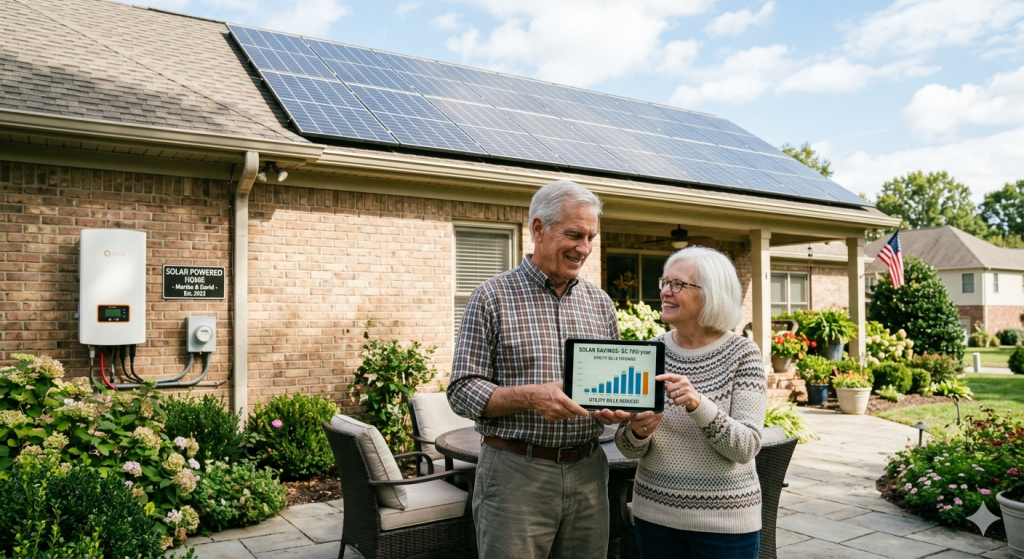
Is solar worth it for retirees? It’s a fair question — especially at a stage in life where you’re not looking for a 25-year gamble, but practical, reliable ways to reduce expenses now.
The good news is that for many retirees, solar can absolutely be worth it—but only if it fits your specific situation.
What Makes Solar Worth It in Retirement?
Several key factors determine whether solar makes sense for you:
1. High Electric Bills
If you’re spending $150–$300+ per month on electricity, solar can make a meaningful impact relatively quickly. The higher your bill, the more opportunity there is to save.
2. Staying in Your Home Long-Term
Solar typically works best if you plan to stay in your home for at least 5–10 years. This gives you time to recover the upfront cost and benefit from long-term savings.
3. Rising Energy Costs
Electric rates aren’t going down anytime soon. Solar helps you lock in lower energy costs and reduce exposure to future rate increases—something that becomes even more important in retirement.
What About Battery Storage?
This is where things get more interesting.
Solar alone reduces your bill, but adding a battery gives you control over when you use your energy. That’s critical if your utility charges higher rates during peak hours.
Instead of buying expensive electricity in the evening, you can use energy stored earlier in the day—making your system far more efficient and cost-effective.
My Personal Experience
When I bought my home, it already had solar installed. At first, I thought, “Great, problem solved.”
But I quickly realized that:
- Timing matters
- Storage matters
- Strategy matters
That realization led me to add an EcoFlow Delta Pro 3 and completely rethink how I use energy. Instead of just generating power, I started focusing on managing it more effectively.
Realistic Payback Expectations
It’s important to keep expectations grounded:
- Solar without a battery: ~5–10 years to pay back
- Solar with a battery: Longer payback, but greater control
Here’s the key takeaway: this isn’t just about return on investment—it’s about reducing your monthly expenses now and creating predictability in your budget.
When Solar Might NOT Be Worth It
Solar isn’t the right fit for everyone. It may not make sense if:
- You plan to move in the near future
- Your electric bill is already low
- Your roof isn’t suitable for solar installation
The Retirement Perspective
This is where the conversation changes.
In retirement, you’re not just making an investment—you’re making a lifestyle decision. Solar can help you:
- Reduce fixed monthly expenses
- Increase financial stability
- Create more predictable costs
Final Verdict
Solar isn’t just about saving money—it’s about taking control of one of your largest recurring expenses.
For many retirees, that level of control is just as valuable as the savings itself.
Next Step
Want to take this a step further?
Read next: How to Use a Home Battery to Lower Your Electric Bill